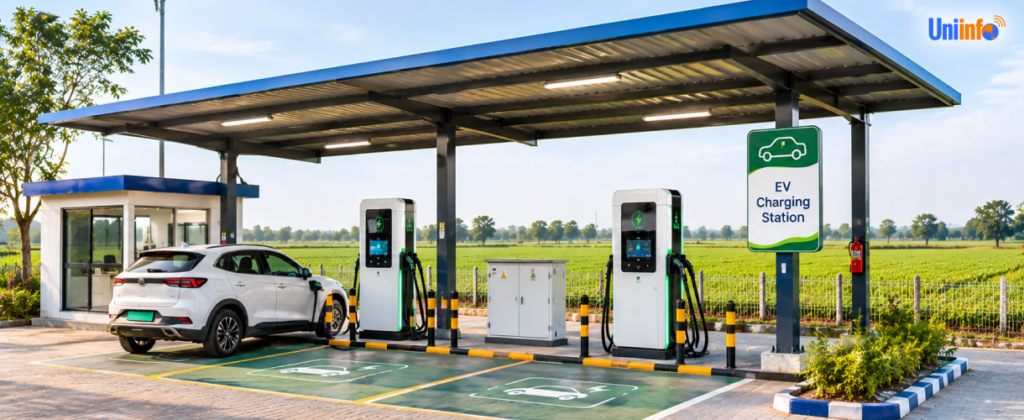
Yes, you can set up an EV charging station on your land if drivers can reach it easily, enough of them are likely to use it, and the site can get the power it needs at a cost your business can support.
If you own a plot near a highway, hotel, market, or logistics hub, start with one question: Who would charge here regularly, and why would they choose this location? The answer will help you decide what kind of charger to install, how much to spend, and whether to move forward.
How do I know if my land is suitable for EV charging?
Stand at the entrance to your plot and look at it as a driver would. Is it easy to spot? Can a car turn in and leave without a difficult detour? Is there somewhere to wait while it charges?
Then look at who already stops nearby. A plot next to a busy highway restaurant may serve drivers who want to charge during a meal. A hotel can serve guests who park overnight. A site near a logistics hub may make sense if a fleet operator needs somewhere to charge vehicles between shifts.
| What to check |
What to look for on your plot |
| Road access |
Drivers can enter, park, and exit easily from the routes they already use. |
| Likely customers | You can identify a group that may use the site regularly, such as hotel guests, commuters, or a nearby fleet. |
| Time spent on-site | Drivers have a reason to stay long enough to charge, such as eating, shopping, or working. |
| Usable space | There’s room for charging bays, vehicle movement, and electrical equipment. |
| Electricity supply | You can confirm the available load and get an estimate for any connection or upgrade you’ll need. |
Check nearby stations in person if you can. See which ones attract drivers, when they get busy, and what customers can do while they wait. If you’re counting on fleet customers, speak with an operator about its routes, parking schedule, and charging needs before you size the station.
How much will it cost if I already own the land?
Owning the plot removes the need to buy land. Your setup budget still needs to cover the chargers, electrical connection or load upgrades, cabling, civil work, and installation. For ongoing operations, allow for electricity, maintenance, and any charging software or payment costs.
The charger price is only one part of the quote. A plot with power available near the proposed bays may require a different scope of work from a plot that needs a new connection or a long cable run. Ask for a quote that spells out the charger capacity, the electrical and civil work included, and which expenses you’ll handle separately.
The right charger also depends on how people will use the site. A restaurant stop and an overnight hotel stay give drivers different amounts of time to charge. If demand is still uncertain, ask what it would cost to start with fewer bays and what you’d need to prepare now to add more later. Read Uni-Info’s guide to EV charging station electrical load.
Already have a plot in mind? Share your location and approximate plot size so Uni-Info can help you assess the power, cabling, and charger placement. Request a Free Site Survey.
Should I run the station myself or lease the land?
If you own and operate the station, you fund the setup, collect charging revenue, and take responsibility for electricity bills, maintenance, payments, and customer support. Before investing, work out how many paid charging sessions you’d need on an average day to cover running costs and recover your setup investment. Use a conservative estimate based on customers you can reasonably expect to serve.
If you lease the plot to a charging operator, your income depends on the lease you negotiate and whether the operator sees enough demand at your location. Ask who will pay for the electrical connection and site work, and what happens to the equipment when the lease ends.
A revenue-sharing partnership is another option. Before agreeing to a percentage, clarify who funds the installation, who pays the electricity bill, and which expenses come out of charging revenue before your share is calculated.
What should I verify before committing to the setup?
Check the site’s permitted land use and any applicable road-access or local approvals. Ask your electricity distribution company, or DISCOM, what supply is available at the plot and what a new connection or load increase would involve. The Ministry of Power’s guidelines cover installation and operation of EV charging infrastructure in India. Read the Ministry of Power’s EV charging infrastructure guidelines.
Why choose Uni-Info for your EV charging station setup?
You can start with the plot you have, even if you haven’t chosen a charger or worked out the electrical load. During the site survey, Uni-Info’s engineers assess the available load, cabling requirements, and where chargers can be placed. That gives you a clearer picture of what the installation would involve before you commit to equipment or site work. Explore Uni-Info’s EV charging infrastructure services.
If you decide to proceed, the same team can handle load planning, charger and switchgear installation, testing, and commissioning. You can see an example of its work at the Jio-bp site in Whitefield, Bengaluru, where the published project details show a mix of fast and slower chargers across a 144-space parking site. View the Jio-bp Whitefield project.
Find out what it would take to set up EV charging on your land
You don’t need a finished layout or a charger shortlist to make an inquiry. Add your Google Maps pin or plot address, approximate land size, and a nearby landmark in the message field. If you already know your available power load, include it. If you’re still comparing options, mention whether you’re thinking about public charging or serving a specific fleet or property.